Six prompts, each with the result it produced. Every screen here is the first generation of the prompt as written, with one exception noted below. Copy one, change the names to yours, and send it from the projects page. The times and credits are what each run took when we made this page. Yours will differ a little, and so will the design.

A phone app flow

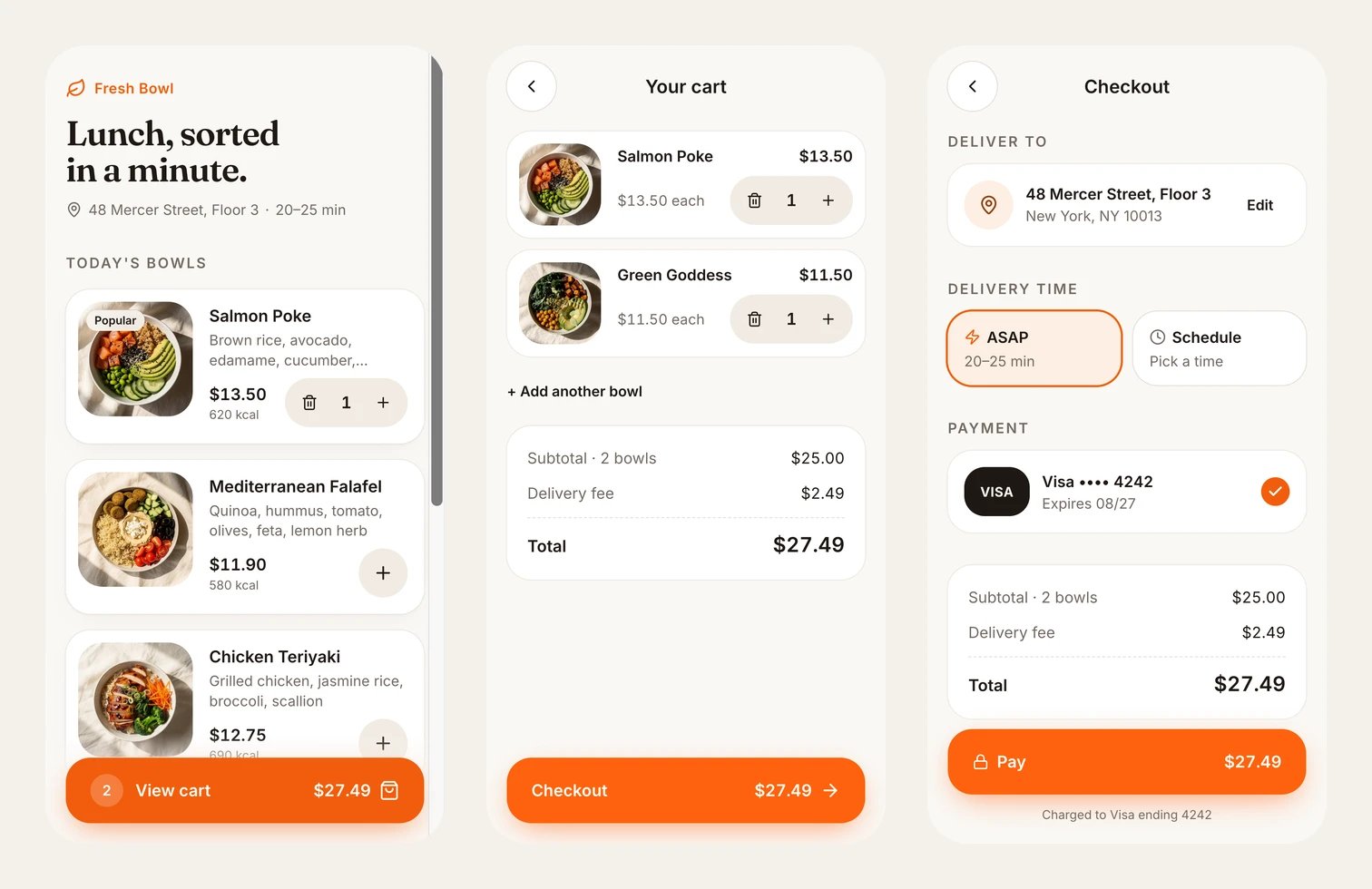
Three linked screens as one prototype. 85 credits, under five minutes.
Three phone screens of a lunch ordering app: a menu of bowls, a cart with a total, and a checkout
Why it works: it numbers the screens, names the one main button on each, and ends with what to leave out. A published copy from a second run of this prompt is at fresh-bowl-blog-cs4oh13v.polymet.app. The full walkthrough is Prototype an app idea.

A dashboard with loading states and a phone layout

One page with a sidebar, stat cards, tabs and a table, plus a sheet, a dialog and a toast. 126 credits, about five minutes.
A dark project tracker dashboard with a sidebar, a top bar with search and a New project button, four stat cards, tabs and a table of projects with owners, status badges and progress bars
Why it works: layout, behaviour and style are three separate blocks, and every component is called by its name. What it missed: the prompt describes the phone and the desktop, not the width in between, and at tablet width the top bar cut off a button. One follow-up prompt fixed it. The exception: the people’s names in this screenshot were changed with a follow-up prompt before we took it.

A pricing page

Three plans with a recommended one, a comparison table and a guarantee. 88 credits, about four minutes.
A pricing page with a headline, a monthly and yearly switch, and three plan cards: Starter, Growth marked Most popular on a dark green card, and Scale
Why it works: it names the plans, says which one to recommend and lists what goes under the cards. It names no product, so the agent made one up. Name yours.

A dashboard from your own data

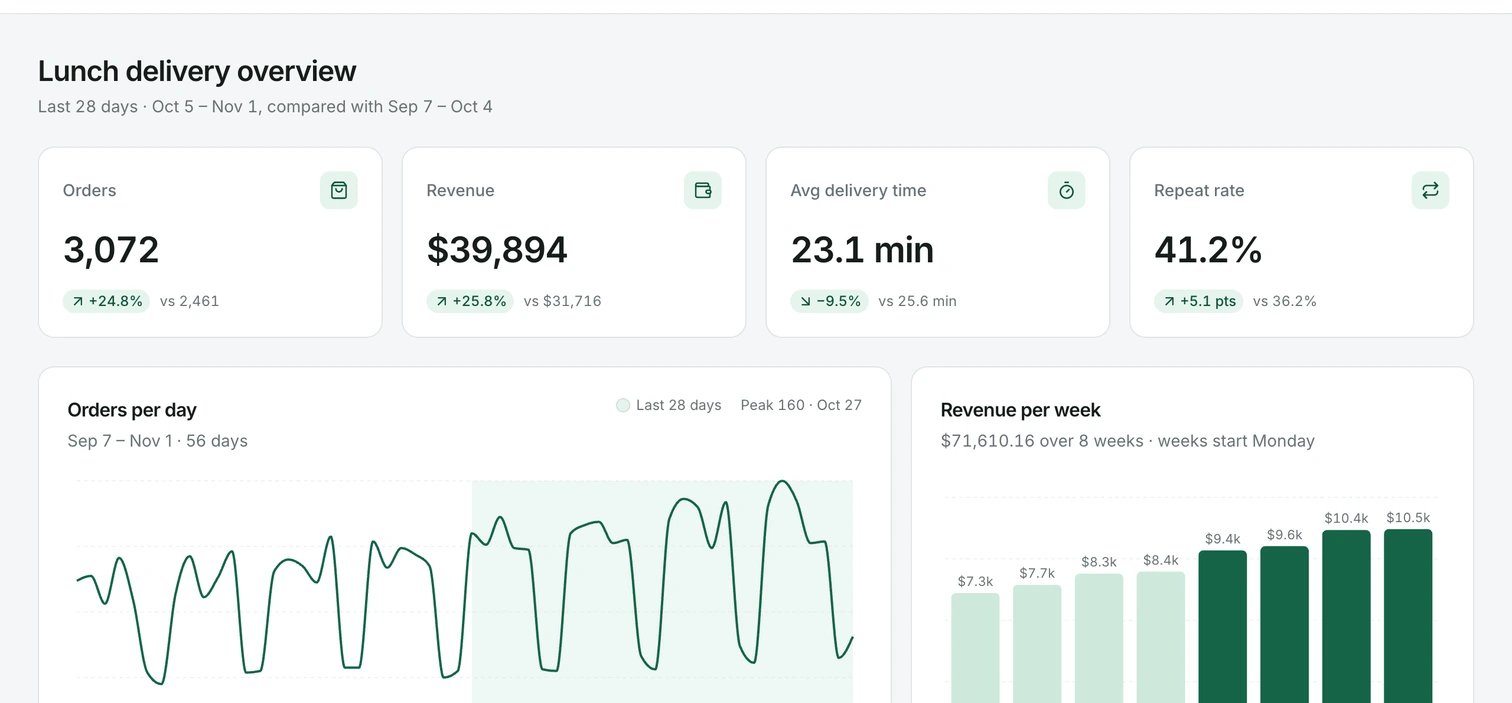
Attach a CSV, then send this. 58 credits, about three minutes.
A light dashboard with four stat cards, a line chart of orders per day and a bar chart of revenue per week
Why it works: it defines the one number the file does not hold, and it says to use the file’s numbers. The full walkthrough, with how to check them, is Dashboard from a CSV.

A do and don’t page

Three patterns, each built next to its opposite, as working fields and forms. 47 credits, about four minutes.
Two order summaries side by side for the same $40 purchase: one with a pre-ticked add-on and a faint fee totalling $51.49, one showing $40.00 up front
Why it works: each pair is described as the same thing twice with one difference, down to the amounts. Use this shape for a design review, a guidelines page or a talk.

A component sheet built on theme tokens

Buttons, an input, a select, a card, badges and tabs that all follow two tokens. 32 credits, under two minutes.
A sheet of components: orange buttons in three sizes and three variants, a card with a Save changes button, an email input, a role select, three badges and tabs
Why it works: “from the theme tokens, not hard-coded values” is a condition you can test. Changing the two tokens afterwards took one sentence, and every component followed.